

It’s time again to support Foodbank WA, one of Forest Crescent’s annual initiatives and a key part of our sustainability programs. Many people need help accessing nutritious, affordable food because of unexpected challenges such as rising living costs, health issues, family separation, unforeseen bills, or job insecurity. Often, this assistance is temporary and helps families get through difficult times.
A message from our Year One Team
For years, Forest Crescent PS families have generously donated non-perishable food items. FCPS will host our annual Foodbank Drive for the first two weeks of November (Weeks 4 and 5). Donation boxes will be in each year level’s Wet Area until 13 November. Teachers will bring all donation boxes to the Year One block by Friday the 13th of November.
In 2024 we collected 307kg of donations; in 2025 we collected 586kg. Let’s see if we can make 2026 even better!
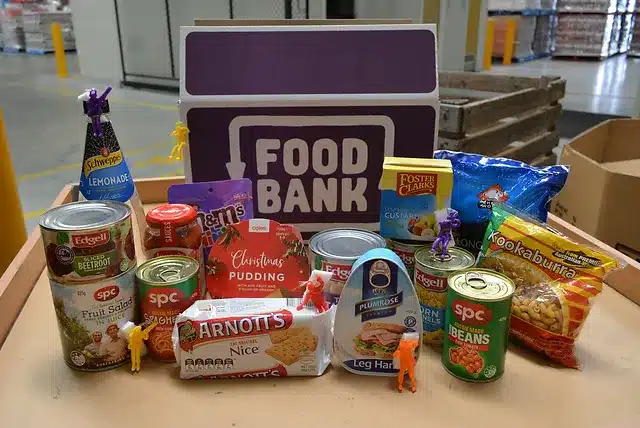
Below are some of the most needed items:
- Canned meals
- Canned vegetables and fruit
- Long-life milk
- Canned soup and tuna
- Tea and coffee
- Pasta and rice
- Baked beans
- Pasta sauce
- Oats and cereal
- Gluten-free products
- Spreads and jam
- Household cleaning products
- Meal bases
- Nappies
- Vegan-friendly items
- Toilet paper
Please ensure all items are non-perishable and not past their expiration date. Thank you for your continued support!
Thank you for supporting this worthy cause.
Year One Team
A message from Kylea Tink, Foodbank Australia CEO
In its 13th year of publication, the Foodbank Hunger Report 2025 shows persistent, endemic food insecurity, with an unacceptable 1 in 3 (3.5 million) households still facing the distressing question of what, if anything, they will put on the table for their next meal.
It appears the economic volatility of recent years won’t ease in the foreseeable future, so it’s concerning that we’re not getting any better at protecting the food security of particularly vulnerable Australians.
Rather, despite a number of short-term measures, such as one-off payments and rebates, a significant number of households continue to struggle to meet their fundamental needs.
Australia’s housing affordability crisis appears to be supercharging food insecurity in a way we haven’t seen before with nearly 1 in 2 rental households reporting as food insecure. It is entirely unacceptable that people across Australia are facing scenarios where food and shelter have become mutually exclusive.
Overall food insecurity levels have not improved on 2024, with certain groups being observably worse off.
Shockingly, nearly 7 in 10 (67%) of households that have a person with a disability or health issue now experience food insecurity, with three-quarters of these severely affected. Also, alarming is that the similar proportion (68%) of single-parent households are now food insecure.
At the same time, while this year’s Report tells us awareness of food relief services is increasing, it also reflects the fact that too many people still hesitate to seek help. Almost half of food insecure households say embarrassment, stigma or shame prevent them from accessing assistance, while many others believe someone else is in greater need.
The Foodbank Hunger Report 2025 makes it clear that for millions of Australians, the basics of life, food, shelter and security are still far from guaranteed in spite of what we hear about economic improvement.
Ultimately, greater investment in food relief, combined with action on the underlying causes of hunger including housing affordability, income inequality, and tax policy, is essential. At Foodbank, we remain committed to working with our communities, partners and governments to achieve an Australia where no one goes hungry.
Kylea Tink
Foodbank Australia CEO
(Ref:https://www.foodbank.org.au/)
All images are taken from Foodbank WA 2025

FCPS
Forest Crescent PrimaryThe above information is provided by the Forest Crescent Primary School administration and staff to share, inform and celebrate our school community.